
PICC & central-line securement
Protect the line.
Protect the patient.
The CP-100 is a single-use, skin-worn cover designed to hold and protect the whole external part of a PICC line: the hub, extension legs, clamps and connectors.
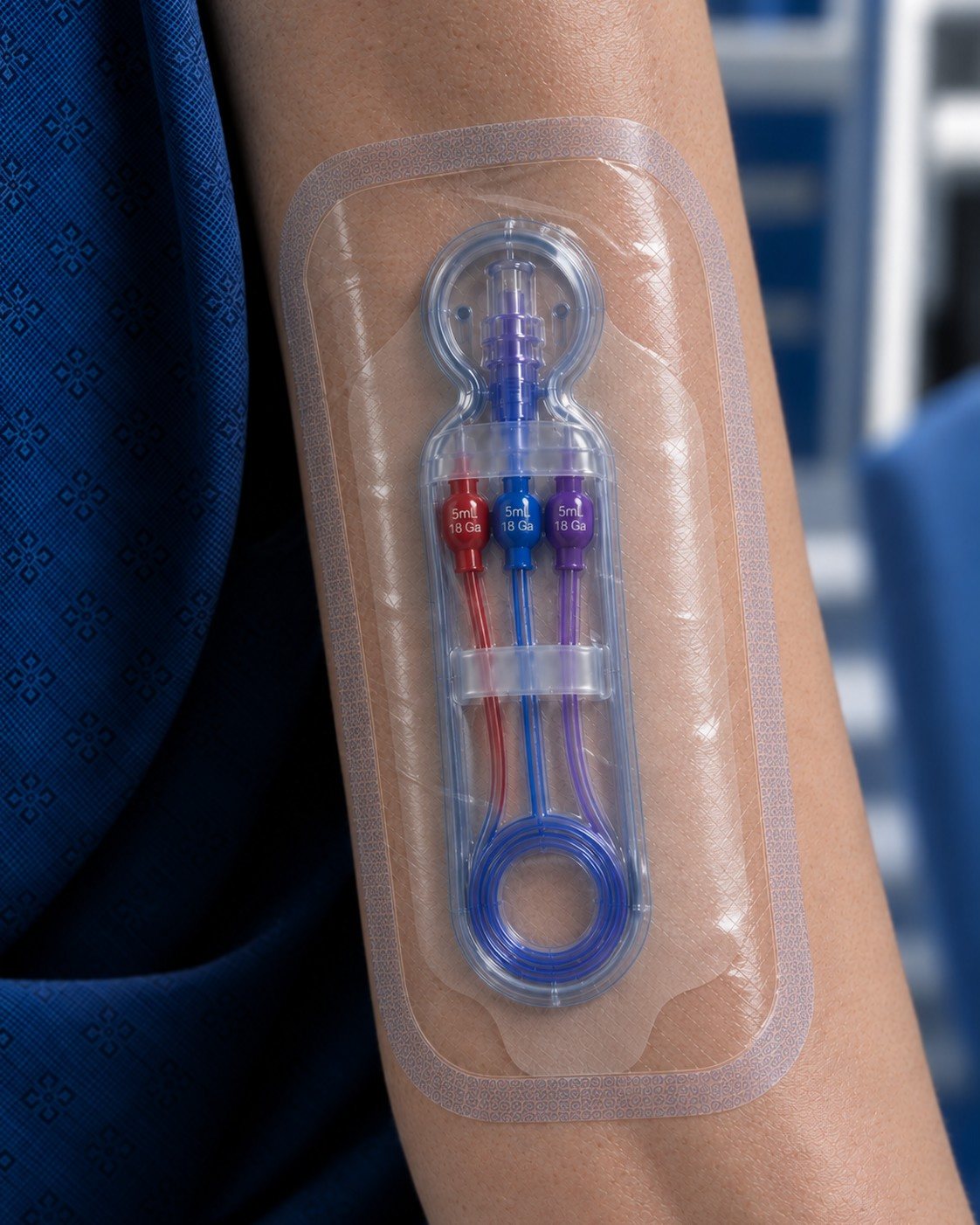 V4 prototype rendering

01 · The problem
A thin tube, worn for weeks, exposed to everyday life.
A PICC can stay in for weeks or months, often at home. The part outside the body catches on clothing and bedding, tugs at the insertion site and works loose, even with today's securement in place.
of PICCs dislodge in recent studies (2.3–8%), more often in lines with more lumens.
of PICCs had a complication of some kind in one prospective cohort of 192 lines.
of patients report at least one line problem after leaving hospital.
say their line restricted their daily activities.
Figures from published studies. Explore the clinical picture
V4 prototype rendering02 · The solution
One cover for the whole external line.
Most securement anchors the catheter itself. The CP-100 is designed for everything after it, in one low-profile housing on the upper arm.
Holds the hub
Designed to take tugs on the tubing away from the insertion site.
Manages the tubing
Keeps excess tubing in a managed loop, designed to stop it catching or bending sharply.
Covers the connectors
The end connectors stay accessible for flushes and infusions.
Keeps the site visible
A clear window allows checks without removing anything.
03 · How it fits
Added on top. Nothing replaced.
The line, the dressing and the securement device are placed exactly as today. The CP-100 goes over them.
CP-100
Worn over both, holding and covering the external line.
Primary securement
Stays exactly as it is today.
Transparent dressing
Placed and changed on its usual schedule.
Skin
Clean, dry and intact. Nothing is threaded over the line.
04 · Wear
Changed with the dressing, every week.
A fresh device goes on at the routine dressing change the nurse already makes. It stays on through flushes, infusions, showering and sleep.
A typical home course uses about six devices. Proposed wear schedule, to be confirmed in the instructions for use.
05 · Who it's for
For people living with a line at home.
Most long-term PICCs in the US are managed at home through home infusion.
US home PICC courses a year, by therapy
Clearport estimate from published volumes and dwell times.
06 · Clinical guidance
Designed with today's standards in mind.
Securement plus dressing
Use a securement method in addition to the primary dressing. Inadequate securement can cause dislodgement and premature removal (Level I).
Manage the tubing
Use a securement product or a taped tension loop of tubing to reduce the risk of accidental dislodgement.
Routine dressing changes
Replace transparent dressings on central lines at least every 7 days, or sooner if damp, loosened or soiled.
Get in touch
Questions about the CP-100?
For clinical or partnership questions, write to the founders directly. We read every message.